Lale Sokolov and Gita Furman's relationship
The Tattooist of AuschwitzLale Sokolov and Gita Furman's relationship is the emotional core of the narrative, a love story forged in the Auschwitz-Birkenau concentration camp that begins with a tattoo and endures through separation, survival, and reunion. Their bond transforms from a tattooist's fleeting encounter with prisoner 34902 into a defiant commitment to live, to find each other, and to build a life together, ultimately culminating in marriage and a family. The relationship is defined by its origin in an act of dehumanization, its growth through secret letters, smuggled food, and shared promises, and its endurance as a testament to love as an act of resistance against the Nazi genocide.
Origin: The Tattoo and the First Glance
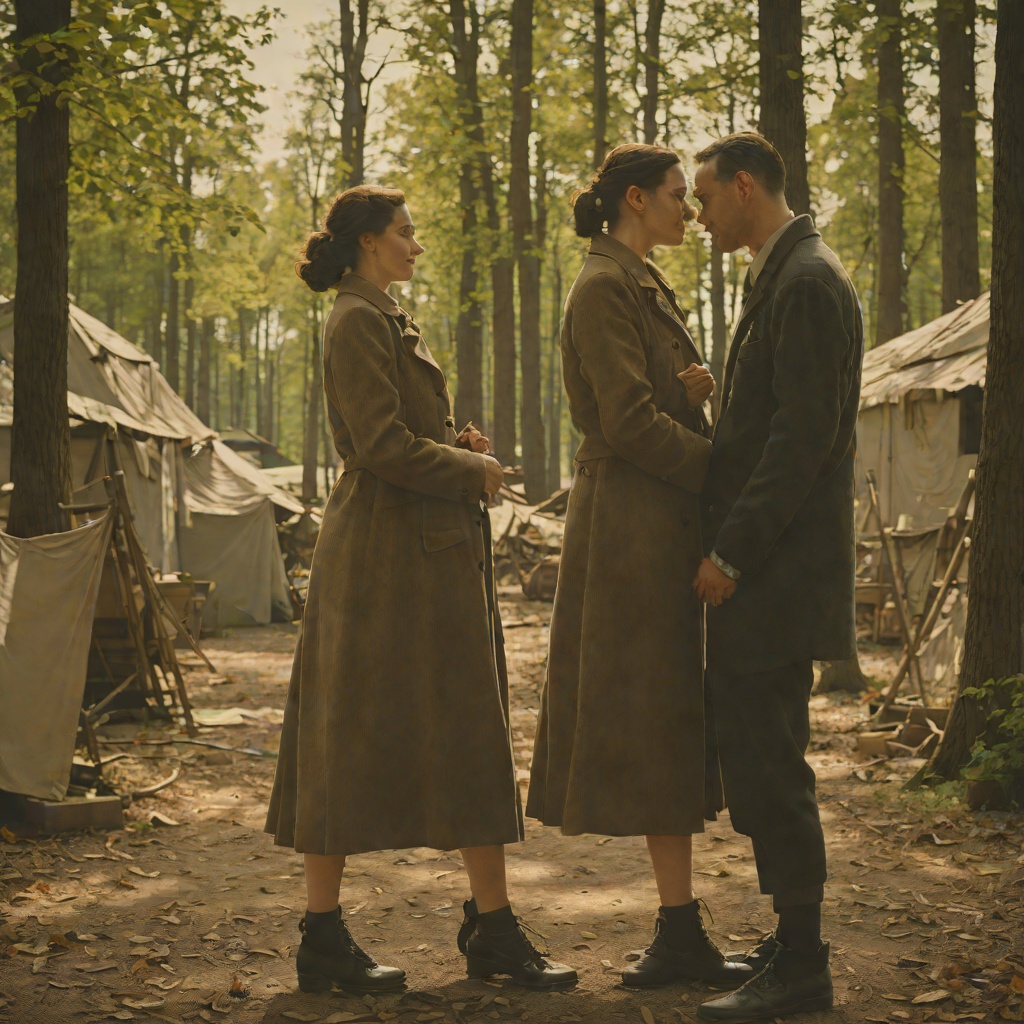
The relationship begins in the most brutal of circumstances. Lale, the camp's Tätowierer, is handed a piece of paper with five digits and must transfer them onto the arm of a girl who holds it. He pushes the needle into her left arm, making a three, trying to be gentle, but the needle hasn't gone deep enough, and he has to trace the number again. She doesn't flinch at the pain he knows he's inflicting, having been warned to say nothing and do nothing. He wipes away the blood and rubs green ink into the wound. As he sets about tattooing the remaining four digits—4 9 0 2—he whispers, "Well done," and holds on to her arm for a moment longer than necessary, looking again into her eyes. He forces a small smile, and she returns a smaller one. Her eyes, however, dance before him. As he looks into them, his heart seems simultaneously to stop and to begin beating for the first time, pounding, almost threatening to burst out of his chest. The ground sways beneath him, and another piece of paper is thrust at him. This moment, marked by the number 34902, becomes the seed of everything that follows.
Courtship Through Letters and Bread
Their connection deepens through a fragile, clandestine courtship. After their first meeting, Lale learns her number is 34902 and asks for paper and pencil to write to her. She responds with a note beginning "Dear Lale," revealing she is also from Slovakia, has been in Auschwitz since early April, and works in one of the warehouses nicknamed "Canada," where prisoners sort through belongings confiscated from fellow victims. She will be in the compound on Sunday and will look for him. Lale rereads the note, turns the paper over several times, and scribbles in bold on the back: "Your name, what is your name?" On a Sunday, he sees her again, recognizing her at once among a group of girls with shaven heads, all wearing the same plain clothing. There is nothing to distinguish her except for those eyes—black, no, brown, the darkest brown he'd ever seen. For the second time, they peer into each other's souls, and Lale's heart skips a beat. He comes close to her, drawn again to her eyes, while her friends giggle quietly in the background. She smiles a weak, tentative smile, and Lale is almost rendered speechless. He summons the courage to hand her the bread and a letter in which, unable to stop himself, he has told her that he can't stop thinking about her. Behind him, someone says, "Gita." When she finally speaks, she jokes about having a big breakfast and kissing Mama and Papa goodbye before catching the bus to work, a bitter irony that Lale meets with his own introduction: "My name is Ludwig Eisenberg, but people call me Lale. I come from Krompachy, Slovakia. I have a mother, a father, a brother, and a sister." He pauses, then adds, "Now it's your turn." He makes a promise: "That before we leave here, you will tell me who you are and where you come from."
Care, Sacrifice, and the Fight for Survival
The relationship quickly moves beyond words into acts of desperate care. When Gita falls ill, Lale is instructed to take her to the Canada, hide her among the clothes during the day, get as much water into her as possible, and bring her back to his block for roll call, repeating this for days until medicine can be obtained—the only way to stop her from being taken to the hospital. He later asks if she can be transferred from the Canada into the administration building, seeking to protect her further. As she recovers, Lale walks slowly alongside her, wanting to put his arm around her like he saw Dana and Ivana do, but he doesn't dare. It is good enough to be near her. She wears a long woolen coat with deep pockets, and Lale fills them with food before he sends her back to her block to rest. He even procures an exquisite silver ring with a single diamond set in it, handing it to her with the words, "It's yours." Their love is declared openly when he tells her, "My beautiful Gita. You've bewitched me. I've fallen in love with you." Their bond is tested by the horrors around them, including the castration of his friend Leon by Mengele, which Lale witnesses the aftermath of, and his own imprisonment and torture in Block 11, where for two days he sits in a cell, reliving every moment he has spent with Gita while listening to the cries and screams of others.
Promises and the Question of Faith
The relationship is also defined by its promises for a future beyond the camp. When Gita raises the question of her Jewish faith, Lale responds gently, "I have no problem with you keeping your faith. In fact, I will encourage your faith if it means a lot to you and keeps you by my side. When we leave here, I will encourage you to practice your faith, and when our babies come along, they can follow their mother's faith. Does that satisfy you?" He also makes a promise about marriage, saying, "One day you will say those two little words to me under different circumstances. In front of a rabbi, surrounded by our family and friends." When she asks when they will be together, he insists, "Not yet. I told you, on the day we leave this place. Please don't ask me again." These promises anchor their love in a shared vision of survival and a life after the camp.
Separation, Reunion, and a Life Together
The war separates them, but their love endures. During the evacuation of Birkenau, they are parted, and Gita escapes during the death march. Lale, after his own escape and flight, spends two weeks loitering at the train station in Bratislava, approaching every disembarking woman with the question, "Were you in Birkenau?" On the few occasions he gets a yes, he asks, "Did you know Gita Furman? She was in Block 29." No one knows her. Finally, Gita appears. Clearly Lale is not going to move, or is incapable of moving, so she walks to him. Kneeling down in front of him, she says, "In case you didn't hear me when we left Birkenau, I love you." She reveals her full name: "Furman. My name is Gita Furman!" They are reunited, and Lale changes his name to Sokolov, the Russian last name of his married sister—a name more readily accepted than Eisenberg in Soviet-controlled Slovakia. He and Gita were married in October 1945, and they set up home in Bratislava. Lale started importing fine fabrics—linen, silk, cotton—from throughout Europe and Asia, selling them to manufacturers desperate to rebuild and reclothe their country. Their life together is marked by the determination that their children should know what they went through. Their son recalls that both parents were determined he should know their story, making him watch The World at War alone every week when he was thirteen, unable to watch it with him. His father was comfortable talking about his adventures in the camp, but only on the Jewish festivals when the men would sit around the table and chat. His mother, however, said nothing of the details except on one occasion when she told him that in the camp, when she was very sick, her mother had come to her in a vision and told her, "You will get better. Move to a faraway land and have a son."